


In terms of philosophical works, there is a lot out there. Yet I would bet that you have not heard of authors such as Friedrich Schiller and Johann Gottfried Herder, and you may have heard of Henry David Thoreau. These authors present some amazing ideas that can be effectively applied to everyday life. The works I will be looking at are:
- Walden, Henry David Thoreau
- Another Philosophy of History, Johan Gottfried Herder
- On the Aesthetic Education of Man, Friedrich Schiller
Many people often cite Plato as one of the main authors to seek out when studying philosophy, and while he is relatively easy to follow and presents some genuinely interesting arguments, he simply isn’t that practical. Some of his arguments can be successfully argued against, and some others are highly debatable. He is excellent for an introduction in philosophy, he is just not that convincing.
The texts that I will recommend below are more difficult than Plato, for the most part. But I can also say that they are worth it. Harder, but much more enlightening and practical than what may be contained in the Republic. It was by almost accident that I even encountered these works in the first place.
During my final semester in my undergraduate program, I had to take a seminar course following a particular series of texts that my professor chose. Throughout my entire academic career, I had never heard of Herder or Schiller and never encountered Thoreau as a genuine philosopher. For this, I have to thank my professor for the introduction.

- Walden, Henry David Thoreau
Walden is not often thought of as a philosophical work. Yet the text does philosophize quite a bit, at times not reaching a definite conclusion. Thoreau left the society in which he lived (1845 Massachusetts) to live in the woods for a short time, about two years. During this time, he recorded his thoughts, observations, and the manner in which he lived. He subsisted on only the necessities, limiting his diet to a meager amount and his possessions to near destitution.
This situation provoked a lot of thought for Thoreau, mostly revolving around living a simple, wise, and free life. Even I have to admit that not all of Walden’s sections are super insightful, they may just be his observations of his surroundings. If the entire text does not interest you, I took the liberty of jotting down the most philosophically important chapters, in my opinion, of course.
Where I lived, and What I lived for
Higher Laws
Conclusion


- Another Philosophy of History, Johan Gottfried Herder
Another Philosophy of History by Herder was a very surprising text when I had first read it. Herder attempts to look at human history as a whole and examine an individual’s place within it, as well as examine how culture changes over time. Herder asks important questions that I and my classmates seemed to never explore before, for instance, do rationality and enlightenment values actually improve life? Or is it merely coincidental that human life improved when enlightenment values were adopted?
Whether or not you agree with Herder, this book attempts to get you to question the trends that take place within society. Ultimately, after reading it, I came away with the idea that cultures and large scale operations are adrift at sea, and their ends may not be within their own control. Maybe we don’t have as much impact on the changes that occur within our lifetimes that we like to believe. If so, then we can sit back and enjoy the ride.
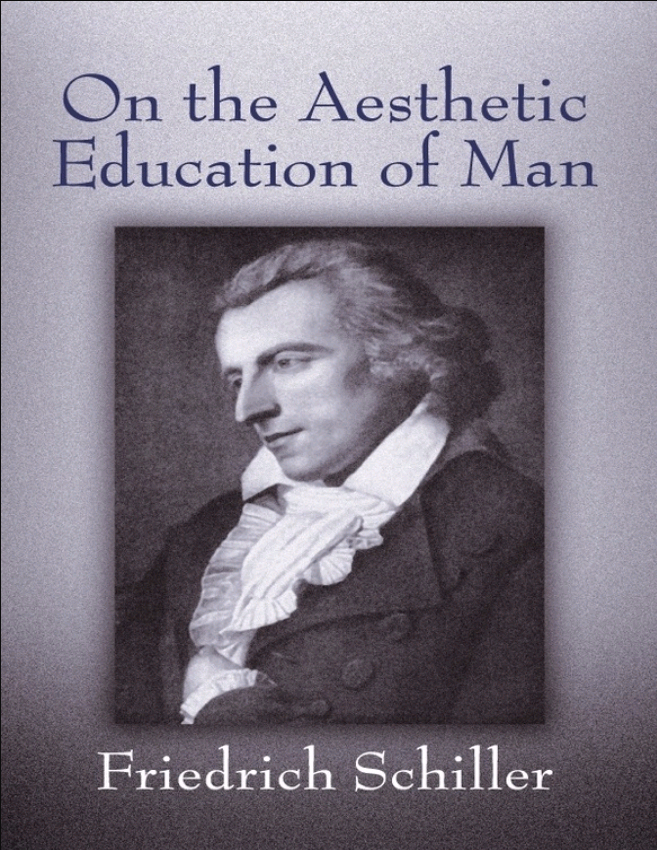
- On the Aesthetic Education of Man, Friedrich Schiller
This one is last on the list for a very important reason, it is (in my view) the best of these texts, but also right up there with Kant in terms of difficulty. Schiller takes a very philosophic approach to flushing his vision out of what constitutes Beauty, and the implications that come from it. Beauty? But how is that a philosophically relevant topic?
Well, that’s what I thought at first. Yet Schiller completely blew my expectations out of water. This text uncovers an inspiring account of what exactly beauty is, and it turns out that beauty may be one of the most important factors determining human behavior and can give us hints into how one ought to live the good life. If you have the patience to work through this brief, but dense text, I would recommend it highly.
 Philosophy Applied
Never heard of any of those books but they seem like great reads. Would like your ideas about stoicism which I find fascinating.
LikeLike